

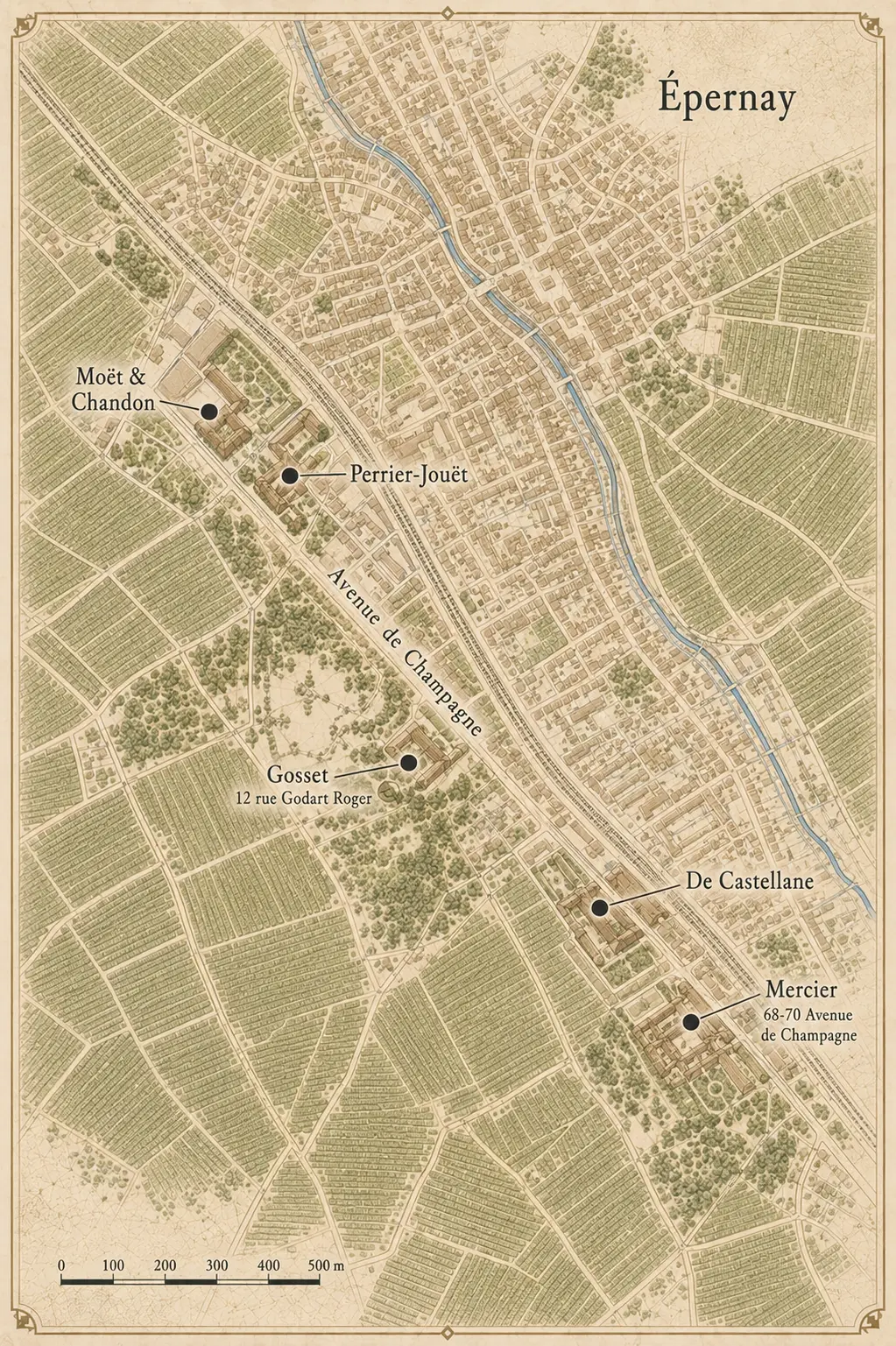
Champagne Gosset in Épernay
Gosset traces its origins to Pierre Gosset in Aÿ in 1584, when he made still wines rather than sparkling Champagne. Its present visitor domaine is in Épernay: the house acquired the historic two-hectare property in 2009 and opened it to the public in July 2021. That distinction between Aÿ roots and an Épernay setting is useful when planning a visit.
This is a wine-first choice, with a domaine that brings tasting, a wooded park and historic cellars together. Guided cellar visits and tastings are offered by reservation; the setting is a reason to consider Gosset alongside a larger visitor attraction, not a promise of a private visit.
What Makes Gosset Unique
The house's history begins with Pierre Gosset's winemaking and merchant activity in Aÿ in 1584, well before Champagne's sparkling identity developed.
Freshness and vinosity are the house's stated stylistic priorities. Extended bottle ageing adds depth while preserving the structure that makes the wines interesting at the table.
The Épernay domaine combines a wooded park, a Champagne bar in the Winter Garden and 1.7 kilometres of nineteenth-century chalk cellars. Check the available visit format before booking.
Signature Style
Gosset balances mineral freshness with vinous depth rather than aiming for softness alone. Grande Réserve is the house reference: Pinot Noir supplies structure, Chardonnay contributes freshness, and cellar maturation brings honeyed and lightly toasted notes alongside the fruit. Grand Rosé adds a red-wine component and a more fruit-led contrast, while Celebris represents the vintage prestige expression. These are style reference points, not a guaranteed tasting line-up.
Range Highlights
- Grande Réserve Brut — the clearest house reference point; Wine Spectator, 92–93 pts; James Suckling, 92 pts.
- Cuvée 12 Ans de Cave à Minima — a mature, cellar-aged expression that reinforces the house’s more serious style positioning.
- Celebris — the prestige expression used to show the upper end of the Gosset range.
Visitor Praise Highlights
- Visitors often respond well to the quieter and more personal feel of the setting.
- Guides are praised for thoughtful explanations and strong historical grounding.
- Tastings are appreciated for showing a more character-driven side of Champagne.
Similar Vineyards
- Moët & Chandon — international fresh prestige.
- Mercier — international broad.
Nearby Restaurants
Clotaire — Hautvillers — Bistronomic; refined casual dining (2.6 km).
27 Faubourg — Damery — Bistronomic; Champagne bar bistro, bubbly & bites (4.8 km).
Best for
Visitors who care about history, more serious wines, and a quieter, more gastronomic house profile.
Less ideal for
Travellers wanting the biggest spectacle or the easiest high-visibility introduction to Champagne.
Why choose this over nearby houses
Choose Gosset for historical depth, stronger vinous character, and a more contained visit mood than the larger Épernay names.
Route fit
Works best as a contrast stop alongside one more polished or more overtly prestige-led house.