
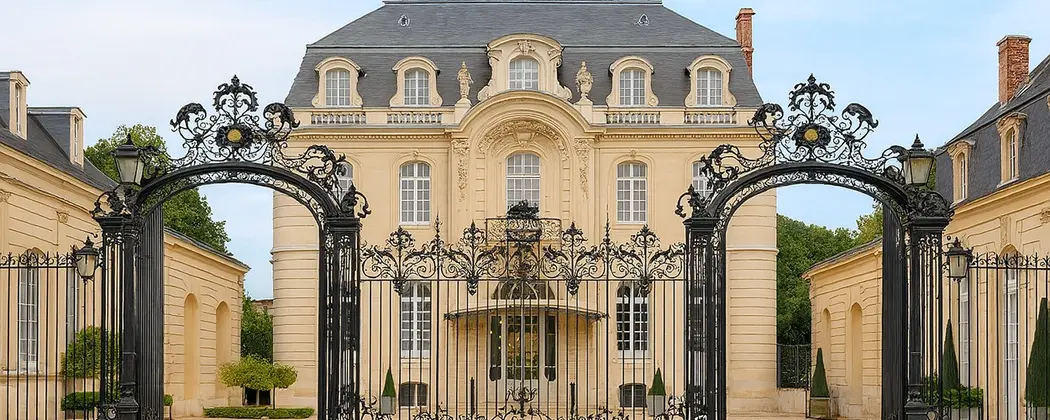
Champagne Jacquesson in Dizy
Champagne Jacquesson was founded in Châlons-sur-Marne in 1798 by Claude and Memmie Jacquesson. The Chiquet family took over in 1974 and established the house in Dizy, just north of Épernay. Jean Chiquet, followed by Laurent and Jean-Hervé Chiquet, shaped its modern reputation around vineyard precision and the numbered Cuvée 700 series. Jacquesson joined Artémis Domaines at the end of 2022.
Today the estate works with 36 hectares of Grand Cru and Premier Cru vineyards across the Grande Vallée de la Marne and Côte des Blancs. Its approach bridges a historic Champagne maison and a terroir-driven domaine: each numbered blend interprets a base harvest rather than trying to reproduce precisely the same flavour every year.
What makes Jacquesson distinctive?
The Cuvée 700 system makes that philosophy tangible. Each release seeks the best expression of its base year, with reserve wines adding complexity rather than obscuring the harvest’s character. For visitors, it is a clear way to understand why a Champagne blended from several years need not pursue an unchanging recipe.
The estate vineyards lie in Avize, Aÿ, Dizy, Oiry, Champillon and Hautvillers and have been certified organic since 2010. First-press cuvée juice, vinification and lees ageing in large oak foudres, no fining or filtration, low dosage and prolonged rest after disgorgement underpin the approach. Vineyard and cellar decisions both aim to preserve differences rather than standardise them.
Signature style and key cuvées
Jacquesson balances breadth with precision. The 700-series blends retain the character of their base year, while the lieux-dits wines isolate individual sites. Oak serves as a vessel for maturation rather than an overt flavour signature; low dosage and long ageing support the structure. These are vinous, gastronomic Champagnes whose interest lies in detail rather than weight alone.
- Cuvée 700 series: the core numbered blend, changing with each base year.
- Late Disgorgement releases: useful for understanding the effect of extra time on lees and post-disgorgement rest.
- Lieux-dits wines: individual-site Champagnes such as Dizy Terres Rouges, Dizy Corne Bautray, Avize Champ Caïn and Aÿ Vauzelle Terme.
Visiting Champagne Jacquesson
Champagne Jacquesson is at 68 rue du Colonel Fabien in Dizy. Treat a visit as appointment-led and subject to availability, not as a walk-in tourist stop. The house currently indicates Monday to Thursday opening, but exact access, language and tasting content should be confirmed before any itinerary is fixed.
If the tasting can include both a current 700-series release and a site wine, the contrast quickly explains the house philosophy: one wine interprets the year through blending, while the other isolates place.
Best fit in a Champagne tour
Jacquesson works best as the analytical stop in an Épernay, Dizy, Hautvillers or Aÿ route. It suits experienced Champagne drinkers, visitors interested in low dosage and terroir, and travellers who want to understand why Champagne blending can be about expression rather than standardisation.
It is less suitable for visitors who want guaranteed walk-in access, a theatrical cellar attraction or a very simple first-brand experience. The strongest route pairs Jacquesson with a producer that shows a different model, such as a more classic house blend or a smaller grower interpretation nearby.
Common visitor questions
- Is Jacquesson a grower or a house?
Historically it is a Champagne house, but its estate-led, site-focused model often feels closer to a domaine. - What does the 700 number mean?
It identifies the house’s evolving annual blend rather than a permanently identical non-vintage recipe. - Can I visit Jacquesson?
Visits should be treated as appointment-only and availability-led. Confirm directly before planning the day around it. - Why are the single-site wines important?
They isolate individual parcels, making grape, slope, soil and village differences easier to compare. - What should we pair it with?
A contrasting Dizy, Hautvillers, Aÿ or Épernay producer usually gives a better learning arc than another similar tasting.