
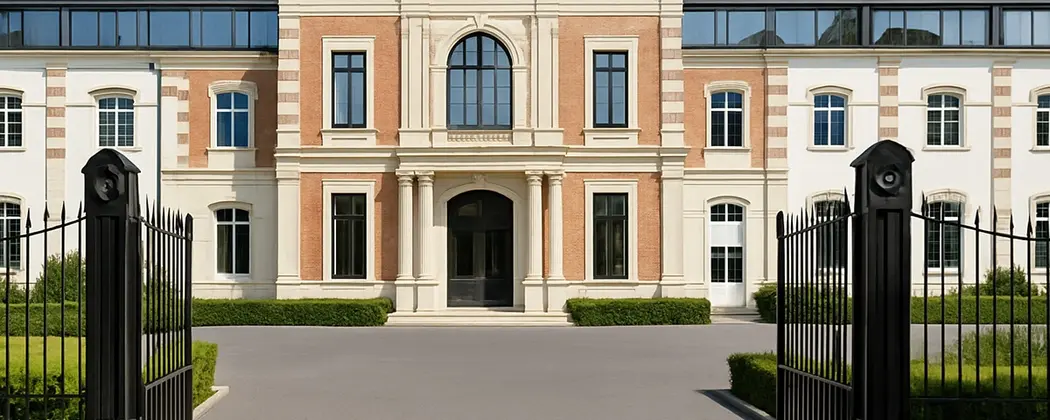
Champagne Lanson in Reims
Founded in Reims in 1760, Champagne Lanson is one of the region’s oldest houses. The Croix Lanson derives from the Maltese Cross adopted in 1798 and remains part of its identity. Its wine story is equally distinctive: freshness, fruit and ageing potential have remained central as the house has evolved.
Hervé Dantan arrived in 2013 and oversaw the redesign of the vinification facilities from 2014. Those changes brought more precise tools to a long-standing philosophy, connecting the history of a major Reims house with the way its wines are made today.
What makes Lanson distinctive?
A broad sourcing palette meets predominantly non-malolactic vinification: much of the wine avoids the conversion that softens malic acidity, preserving tension and a lively structure. Reserve wines and longer cellar ageing add breadth and maturity without losing that freshness. This is a preference, not a claim that every Lanson wine is made identically or entirely without malolactic fermentation.
Clos Lanson provides a different scale of reference: a walled Chardonnay vineyard inside Reims. It connects an urban house to a specific site, although its role in the wines should not be confused with guaranteed physical vineyard access on every visit.
Signature style
Expect citrus and orchard-fruit lift, firm structure and persistent freshness. The house links this vitality to four connected choices: cru selection, predominantly non-malolactic vinification, reserve wines and prolonged cellar ageing. Comparing younger blends with mature releases shows how that energetic core can carry through time rather than giving way simply to softness.
Representative cuvées include Le Black Création, Le Rosé Création, Le Blanc de Blancs, Le Green Bio-Organic, vintage releases and Clos Lanson. Exact wines poured during visits can change, so we confirm the most suitable visit format when planning your Champagne day.
Visitor experience
Lanson's public visits normally combine house history, the garden, winery areas, cellars and a guided tasting. Formats range from shorter introductory experiences to longer Signature or Vintage-style visits, with English and French usually available and other languages sometimes possible on request.
We avoid treating special claims such as private cellar dinners, harvest participation or blending workshops as standard options unless they are separately confirmed for your date and group. That keeps the itinerary realistic and prevents disappointment.
Who is Lanson best for?
Lanson is a strong choice for visitors who want a serious Reims house visit with a clear winemaking explanation, a freshness-led tasting profile and enough scale to feel substantial.
It is less ideal if your priority is a small family-grower atmosphere or a very informal vineyard visit.
How it fits into a Champagne route
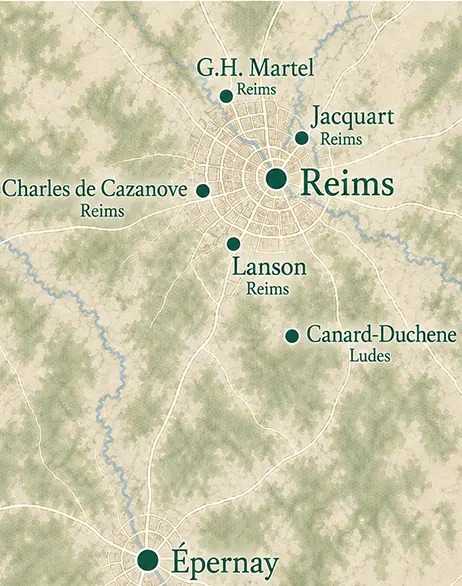
Lanson works well as the freshness-led anchor of a Reims day. It can be paired with another urban Reims house for comparison, with a smaller heritage-cellar visit for contrast, or with a village/château stop such as Canard Duchêne when the route should move from city-house scale into a Montagne de Reims setting.
Nearby Reims lunch and stay options can also make Lanson practical for a private Champagne itinerary, especially when the day is built around Reims rather than a long transfer between distant villages.